Introduction
The 2024 CGA DIRT Report documented 196,977 utility damages, with water and sewer work alone accounting for 24% of incidents. Underground utilities—electrical cables, gas lines, water pipes, fiber optic lines—sit at depths where a single careless dig can trigger injuries, outages, and six-figure repair bills. Underground warning tape alerts excavators before they reach buried infrastructure, making proper installation depth the difference between a near-miss and a costly strike.
How deep should warning tape be buried? The answer depends on tape width, tape type (detectable vs. non-detectable), and the utility being protected. This guide covers:
- Tape specifications and how width affects burial depth
- Depth guidelines by utility type
- APWA color codes and what they mean
- Applicable standards and regulatory requirements
- Installation best practices
Key Takeaways
- Burial depth for underground warning tape ranges from 10" to 36", with wider detectable tape rated for greater detection depths
- General rule: bury tape 12" above the utility it marks, or within 12" of final grade for non-detectable tape
- Utility type determines placement depth — electrical, gas, water, and telecom lines each follow standard trench depths that dictate tape position
- Always use APWA color-coded tape matching the utility below
- Detectable tape must sit within its rated detection depth for metal detectors to locate it
What Is Underground Warning Tape and Why Burial Depth Matters
Underground warning tape is a brightly colored, printed polyethylene tape placed above buried utilities to provide early visual warning to excavators before they reach the utility line. When crews spot it during digging, they know to slow down — critical infrastructure is directly below.
Burial depth isn't arbitrary. Get it wrong in either direction and the tape fails its job:
- Too shallow: Routine landscaping or surface work disturbs the tape before excavators ever reach utility depth
- Too deep: The tape may not warn in time — and for detectable tape with metal cores, it can fall outside the detection range of locators used during pre-excavation sweeps
That detection range distinction is the key reason depth rules differ by tape type. Whether the tape is detectable (metal core for surface locating) or non-detectable (visual warning only), each category follows different placement guidelines based on how it functions in the field.
Detectable vs. Non-Detectable Underground Warning Tape: Specs and Key Differences
Non-Detectable Warning Tape
Non-detectable warning tape is typically constructed from 100% low-density polyethylene (LDPE) film with a nominal 4 mil overall thickness. The material is acid and alkali resistant, lead-free, and formulated for extended underground exposure without degrading. This tape serves purely as a visual warning when uncovered during excavation—it has no metal content and cannot be located from the surface.
Detectable (Metallic-Core) Warning Tape
Detectable warning tape features a 4.5 mil solid aluminum foil core fully encased in printed polyethylene to prevent ink rub-off. The foil core is visible from both sides and creates a highly reflective surface. The metal core allows the tape to be located with a non-ferrous metal detector from the surface without digging—no excavation required before utility work begins.
Detection Depth Relationship
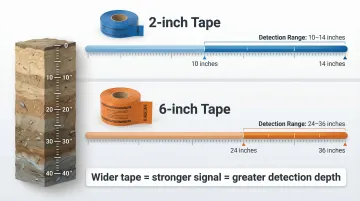
A metal detector's ability to pick up the foil core depends directly on tape width. Wider tape produces a stronger electromagnetic signal detectable at greater depths. General detection ranges by tape width:
| Tape Width | Detectable Depth Range |
|---|---|
| 2 inch | 10–14 inches |
| 6 inch | 24–36 inches |
Matching tape width to burial depth is essential for reliable detection — this relationship is why depth guidelines vary by tape size.
When to Use Each Type
The right choice depends on how much advance warning your installation requires:
- Non-detectable tape: Sufficient where crews will discover the tape visually during routine excavation
- Detectable tape: Required for high-risk utilities—gas, electrical, hazardous materials—where surface locating before any digging is essential to prevent catastrophic strikes
RE&D manufactures both types in compliance with APWA color-coding standards, with custom printing available for project-specific or contractor-branded installations.
Recommended Burial Depths: By Tape Width and Utility Type
Depth Guidelines by Tape Width (Detectable Tape)
The maximum detection depth for detectable tape depends on width. These ranges reflect where a metal detector will reliably pick up the aluminum core:
| Tape Width | Maximum Detection Depth |
|---|---|
| 2" × 1000' | 10" to 14" |
| 3" × 1000' | 14" to 24" |
| 6" × 1000' | 24" to 36" |
Choose tape width based on utility burial depth. A gas main at 30 inches requires 6-inch tape; a shallow 12-inch line can use 2-inch or 3-inch tape. Always bury the tape within the detection window — placing 2-inch tape at 30 inches deep eliminates its locating benefit entirely.
Depth Guidelines by Utility Type
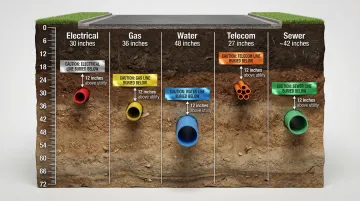
Different utilities are buried at different depths based on federal codes and local frost lines. Tape placement must account for these variations:
| Utility Type | Typical Trench Depth | Recommended Tape Depth |
|---|---|---|
| Electrical power lines/conduit | 24"–36" (NEC Table 300.5) | 12" above the line |
| Gas and petroleum lines | 24"–48" (49 CFR 192.327) | 12" above the line |
| Water mains | 36"–60" (varies by frost line) | 12" above the line |
| Telecom/fiber optic cables | 18"–36" (USDA RUS Bulletin 1753F-150) | 12" above the line |
| Sewer and drain lines | Varies widely | 12" above the line |
Tape should be placed approximately 12 inches above the utility line across all utility types. This provides timely warning while leaving enough clearance for excavators to stop before striking the utility line.
Non-Detectable Tape Placement
Non-detectable tape follows a different logic entirely. Bury it within 12 inches of final grade (the surface). This ensures the tape will be discovered early in any excavation, well before reaching the utility depth. Since non-detectable tape can't be located from the surface, shallow placement maximizes its visual warning function.
APWA Color Codes: Matching Tape Color to the Right Utility
The American Public Works Association (APWA) Uniform Color Code standardizes tape color by utility type, so any excavator encountering warning tape immediately knows what utility lies below.
APWA Color Code:
| Color | Utility Type |
|---|---|
| Red | Electrical Power Lines, Cables, Conduit, Lighting |
| Yellow | Gas, Oil, Steam, Petroleum or Gaseous Materials |
| Orange | Communication, Alarm, Signal Lines/Cables/Conduit |
| Blue | Potable Water |
| Purple | Reclaimed Water, Irrigation, Slurry Lines |
| Green | Sewer and Drain Lines |
| White | Proposed Excavation |
| Pink | Temporary Survey Markings |
Using the wrong color—or unmarked tape—creates real hazard on site. APWA, DOT, and OSHA compliance all require matching tape color to the specific utility type being marked. Getting this wrong doesn't just create confusion; it can mean a crew drills into a gas line expecting a drainage pipe.
Standards and Regulations Governing Underground Warning Tape
Underground warning tape must conform to multiple standards and regulations depending on the utility type and jurisdiction.
Federal Regulations & Pipeline Standards
- 49 CFR 192.321(e) – Requires non-encased plastic gas pipe to include an electrically conductive wire or other approved locating means
- API RP 1109 – "Marking Liquid Petroleum Pipeline Facilities" lists buried tape and warning mesh as acceptable signage methods
- ASME B31.8 – "Gas Transmission and Distribution Piping Systems" includes requirements for damage prevention programs
- DOT Office of Pipeline Safety Standards – Federal gas safety regulations governing pipeline markers and facility identification
Electrical & Facility Standards
- OSHA 1926.956(c)(1) – Applies to underground electrical installation protection; verify applicability before citing in project specs
- APWA Uniform Color Code – Voluntary color standard universally adopted through CGA Best Practices for utility identification
- GSA Public Buildings Service Guide – Governs warning tape requirements for federal facility construction and renovation
While these standards establish baseline requirements, state DOTs and municipal utilities frequently impose additional specifications — on tape width, burial depth, or material — that exceed national minimums. Always verify local and state requirements before specifying tape for a project.
Best Practices for Installing Underground Warning Tape at the Right Depth
Use the Correct Tape Width for Utility Depth
Tape width determines how deep a metal detector can reliably pick up the signal—narrower tape has a shallower detection range. Use the detection depth table to match tape width to burial depth, and always select detectable tape for gas, electrical, and hazardous material lines where pre-excavation locating is required.
Maintain Consistent Tape Depth Throughout the Trench Run
Tape that dips or rises with terrain variations creates gaps in detection coverage—exactly where a locator or excavator needs it most. Run the tape continuously and horizontally at a uniform depth. Use proper backfill techniques to maintain the 12-inch separation above the utility throughout the entire trench run.
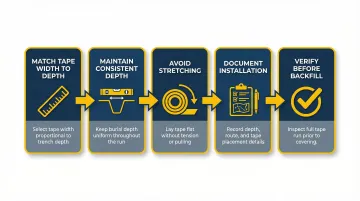
Avoid Stretching the Tape During Installation
Stretching narrows the tape width, which directly reduces the metal detector signal and shortens effective detection depth. Lay tape loosely and without tension. For detectable tape requiring electrical continuity:
- Overlap ends by at least 20 feet
- Or use approved mechanical connectors that pierce the plastic jacket to connect the foil cores
Document the Installation
Record the tape type, color, burial depth, and utility location in as-built drawings or project documentation. Without this record, future crews have no way to confirm what's below or verify detection specs before they dig. RE&D's custom-printed tapes can include project-specific text or utility owner information directly on the tape, making traceability faster during future excavations.
Verify Placement Before Final Backfill
Before completing backfill, verify tape placement meets specifications. Check that detectable tape falls within its rated detection depth and that the 12-inch clearance above the utility is maintained. For detectable installations, test the signal with a metal detector before covering to confirm proper detection range.
Frequently Asked Questions
How deep to bury electrical warning tape?
Electrical warning tape (red, APWA-coded) should be buried approximately 12 inches above the electrical conduit or cable. For detectable tape, width must match conduit depth: 2-inch tape works for lines at 10"–14", 3-inch tape for 14"–24", and 6-inch tape for lines at 24"–36".
What is the thickness of warning tape?
Non-detectable warning tape is typically a nominal 4 mil polyethylene film. Detectable (metallic-core) warning tape uses a 4.5 mil aluminum foil core fully encased in polyethylene for durability and resistance to acids and alkalis underground.
What does it mean if you find a run of colored marker tape when digging?
Colored underground warning tape is a deliberate safety marker indicating a buried utility lies directly below. The color tells you the utility type (yellow = gas/petroleum, red = electrical, blue = water). Stop digging immediately and consult utility locating records to identify the line before proceeding.
What happens if underground warning tape is buried too deep or too shallow?
Too deep, and detectable tape may fall outside the range of metal detectors, eliminating its locating benefit. Too shallow, and the tape may be disturbed by surface activities before excavators reach utility depth, losing its warning function. Both errors undermine the tape's protective purpose.
Do underground warning tape burial depths vary by state or region?
Yes — federal and APWA standards set the baseline, but state DOTs and municipal utilities often impose stricter requirements. TxDOT, for example, requires tape 10 inches above conduit, while ConEdison specifies exactly 12 inches below final grade. Always verify local regulations before installation.
Do I need to use both detectable and non-detectable tape on the same installation?
Some utility owners and project specs require dual-layer systems: detectable tape for pre-excavation locating and non-detectable tape as a secondary visual warning. Check your project specifications and utility owner requirements to confirm whether dual-layer installation applies.