Introduction
When products, equipment, pipelines, or chemicals are mislabeled or left unlabeled in industrial facilities, the consequences extend far beyond administrative headaches. OSHA issued 3,213 Hazard Communication citations in 2023 alone, making it the second most frequently cited standard with penalties reaching $15,625 per violation. Behind these numbers lie real incidents: workers poisoned by unmarked chemical containers, respiratory injuries from mislabeled tanks, and production errors that trigger costly recalls.
The right industrial labeling system directly affects throughput, safety compliance, worker protection, and traceability across manufacturing, warehousing, and construction environments. The wrong choice creates bottlenecks, compliance gaps, and safety risks that compound over time.
This guide breaks down the top industrial labeling system types, compares their strengths and limitations, and outlines the critical factors to evaluate before making a decision that will affect your operations for years to come.
Key Takeaways
- Industrial labeling systems range from manual applicators to fully automated print-and-apply and RFID solutions, each designed for specific production volumes and environments
- System selection depends on production speed, product surface characteristics, environmental conditions, label content complexity, and compliance requirements
- Print & apply systems handle high-speed production lines (up to 150 packs per minute), while thermal transfer printers excel at on-demand compliance labeling
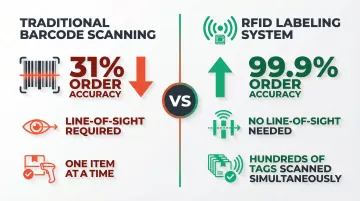
- RFID systems elevate inventory accuracy from 31% to 99.9% but carry higher upfront costs
- Facilities needing pipe markers, arc flash labels, or GHS-compliant labels can source custom solutions from RE&D, a manufacturer and distributor with 33 years of industry experience
What Is an Industrial Labeling System?
Industrial labeling systems encompass the equipment and products used to print, apply, or manage labels on products, containers, equipment, or facilities at scale. Unlike desktop or office label printers, these systems are engineered for continuous 24/7 duty cycles, faster processing speeds, rugged metal enclosures, and integration capabilities (Ethernet, WiFi, PLC connectivity) built for harsh manufacturing environments.
That engineering backbone supports functions that matter on the plant floor and job site:
- Enable product traceability and inventory accuracy
- Support regulatory compliance with OSHA, GHS, and ANSI standards
- Maintain worker safety through consistent, durable marking
- Eliminate manual labeling bottlenecks and data entry errors
The term "industrial labeling" covers a wide spectrum. On one end: automated applicator machines on high-speed production lines printing lot codes and barcodes. On the other: pre-printed vinyl safety signs and pipe markers installed throughout a facility. The global packaging labels market reached $53.92 billion in 2024 and is projected to reach $70.02 billion by 2030, driven primarily by food & beverage (35% market share) and pharmaceutical sectors where compliance and traceability are non-negotiable.
Best Industrial Labeling Systems: Top Options Compared
The best industrial labeling system depends entirely on your application. This comparison covers the five most widely deployed system types, evaluated on speed, accuracy, durability, and application fit to help you match capabilities to your operational requirements.
Print & Apply Labeling Systems
Print-and-apply systems automatically print a label with variable data and immediately apply it to a product or package as it moves along a conveyor. These systems are engineered for high-volume production lines in distribution centers, food & beverage, pharmaceutical, and manufacturing environments where speed and accuracy are critical.
Standout capabilities include:
- Real-time variable data printing (barcodes, lot numbers, date codes, GS1-128 compliance data)
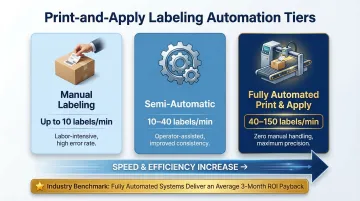
- High-speed throughput from 40 to 150 labels per minute depending on label size and application method
- Non-contact application options like tamp-blow and wipe-on for fragile or recessed surfaces Leading systems integrate OEM print engines from manufacturers like Zebra ZE500 series (printing up to 12 inches per second) and SATO S84-ex (up to 16 ips).
| Feature | Details |
|---|---|
| Application Speed | High — 40 to 150 labels per minute; suited for continuous production lines running hundreds of products per hour |
| Automation Level | Fully automated; minimal operator input required once configured |
| Best For | Case, carton, and pallet labeling in distribution centers and manufacturing lines |
Application method selection is critical. Wipe-on (merge) methods match conveyor speed for high-throughput flat surfaces, while tamp-blow systems handle fragile items or recessed areas where physical contact could cause damage. In a documented case study, Royal Canin achieved 99.98% read accuracy and increased forklift loading rates by 50% after implementing automated pallet labeling, delivering positive ROI within three months.
Pressure-Sensitive Label Applicators
Pressure-sensitive applicators apply pre-printed, adhesive-backed labels to products using a peel-and-press mechanism. Available in semi-automatic and automatic configurations, these systems offer versatility for small to mid-size operations that need to scale beyond manual labeling without the capital investment of full print-and-apply systems.
What makes them stand out: lower upfront costs compared to print-and-apply systems, compatibility with diverse product shapes (flat, round, tapered containers), and ease of changeover for different label sizes or SKUs. Manual wrap labeling yields roughly 300 bottles per hour, while semi-automatic applicators increase this to approximately 1,800 bottles per hour (30 products per minute). Fully automated inline systems exceed 6,000 bottles per hour (100+ ppm).
| Feature | Details |
|---|---|
| Application Speed | Moderate — typically 30 to 100+ products per minute depending on model and automation level |
| Automation Level | Semi-automatic to fully automatic options available |
| Best For | Bottles, jars, containers, and flat packaging across food, personal care, and chemical industries |
Pressure-sensitive labels dominate the global market with a 40% share, heavily deployed in food and beverage, pharmaceuticals, and personal care for primary product decoration and variable information printing. While semi-automatic units require dedicated labor, fully automated systems drastically reduce labor costs and can cut average carton ID costs from $0.0280 to $0.0056 per mark when replacing pre-printed labels with print-on-demand systems.
Thermal Transfer Label Printers (Industrial Grade)
Industrial thermal transfer printers use a heated printhead to melt a wax or resin ribbon onto the label substrate, producing durable, high-resolution labels for on-demand printing of barcodes, serial numbers, compliance data, and variable information directly at the point of use.
Industrial-grade models differ from desktop versions through heavier-duty construction (metal frames vs. plastic housings), faster print speeds, wider label compatibility (up to 8+ inch widths), and the ability to run continuously in demanding plant environments.
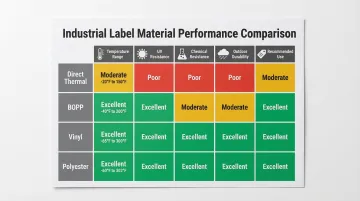
Thermal transfer labels also resist heat, moisture, and chemicals far better than direct thermal alternatives, which fail under UV light, heat, and chemical exposure. For long-term asset tracking, outdoor equipment, and chemical labeling, thermal transfer printing with resin ribbons on polyester or vinyl substrates is the right choice: these materials withstand temperature ranges from -40°F to 300°F.
| Feature | Details |
|---|---|
| Print Resolution | 203–600 dpi; produces crisp barcodes and fine text suitable for GS1 and compliance labels |
| Automation Level | Standalone or integrated; connects to WMS, ERP, or production control systems |
| Best For | On-demand label printing for inventory, asset tracking, and compliance in warehouses and plants |
High-density 600 dpi models like the Zebra ZT610 and SATO CL4NX Plus are replacing 203/300 dpi printers in pharmaceutical and electronics manufacturing, where dense 2D barcodes must fit on small vials or PCBs. Unscannable barcodes lead to product recalls, counterfeit risks, and supply chain delays. Print resolution isn't a secondary spec; it directly determines whether your labels pass compliance scans.
RFID Labeling Systems
RFID labeling systems encode and apply radio-frequency identification tags — either embedded in labels or as standalone hard tags — enabling non-contact, multi-item scanning and real-time inventory visibility without line-of-sight requirements. A 2023 Zebra study indicates that 58% of warehouse decision-makers plan to deploy RFID by 2028.
Key advantages over traditional barcode systems include the ability to scan multiple items simultaneously (hundreds of tags can be read as pallets move through dock doors), reading through packaging or containers, password-protected data storage for secure information, and long-term reusability of hard tags. The Auburn University RFID Lab and GS1 US "Project Zipper" study demonstrated that item-level RFID enables 99.9% order accuracy — compared to just 31% accuracy with traditional barcode scanning, where 69% of inbound orders contained errors.
| Feature | Details |
|---|---|
| Scan Method | Radio frequency — no line-of-sight needed; can read multiple tags simultaneously |
| Automation Level | Fully automated; integrates with WMS and inventory management platforms |
| Best For | High-volume warehousing, asset tracking, and supply chain visibility in logistics and manufacturing |
While RFID tags and infrastructure carry higher upfront capital costs than printed barcodes, the operational savings are substantial. RFID reduces retail out-of-stocks by up to 50%, and by eliminating manual scanning labor and preventing costly retailer chargebacks for shipping errors, facilities typically report full ROI payback periods of 9 to 18 months.
Safety & Compliance Label Systems
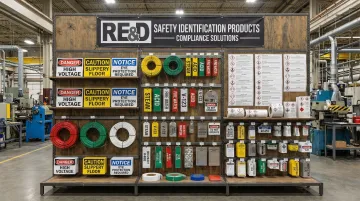
Safety and compliance labeling covers pre-printed or custom-manufactured labels, signs, pipe markers, arc flash labels, GHS chemical labels, and equipment identification tags used throughout industrial facilities. These systems keep facilities compliant with OSHA requirements, support hazard communication, and protect workers across manufacturing and construction environments.
Unlike machine-applied product labels, safety labeling systems are built around three priorities:
- Durability in harsh conditions — UV exposure, chemical contact, and temperatures from -40°F to 300°F
- Standardized formats per regulatory requirements (ANSI Z535, OSHA 29 CFR 1910.1200, NFPA 70E, ASME A13.1)
- Customization for facility- or equipment-specific identification needs
RE&D has been manufacturing and distributing custom safety identification products since 1992, serving manufacturing and construction industries with solutions including custom safety signs, valve tags (aluminum, stainless steel, brass, plastic), nameplates, equipment identification tags, and specialized products like fire sprinkler system nameplates and underground detectable tape.
| Feature | Details |
|---|---|
| Label Types | Safety signs, pipe markers, arc flash labels, GHS chemical labels, equipment IDs, valve tags, floor marking |
| Compliance Standards | OSHA, ANSI Z535, GHS/HazCom, NFPA 70E, ASME A13.1 — custom options available for facility-specific requirements |
| Best For | Manufacturing plants, construction sites, chemical facilities, and any environment with safety and hazard communication requirements |
Key Factors to Consider When Choosing an Industrial Labeling System
One of the most common mistakes buyers make is selecting a system based on price or brand name alone, without accounting for the specific demands of their production environment. This results in underperforming systems, frequent downtime, compliance gaps, and bottlenecks that slow entire production lines.
Production Volume and Speed Requirements
Assess current throughput needs and account for future growth. A semi-automatic applicator may suit a facility labeling 500 items per day, while a fully automated print-and-apply system becomes necessary when production exceeds 30 products per minute or thousands of units per hour.
Mismatched speed capability is a leading cause of production bottlenecks. When labeling capacity can't match line speed, the entire packaging operation slows to the labeler's pace, reducing Overall Equipment Effectiveness (OEE) and increasing labor costs.
Calculate your labels-per-minute requirement, then add a 20-30% buffer for growth. If your current production runs 50 units per minute during peak periods, specify a system capable of 60-65 labels per minute to avoid immediate capacity constraints.
Product and Surface Characteristics
Product shape, surface texture, and material directly affect which application method works. Flat cartons accept most applicators with standard wipe-on or tamp methods. Curved or flexible packaging may require wrap-around or blow-on systems that conform to irregular surfaces. Oily or textured surfaces may need specialty adhesives or alternative methods like heat transfer or shrink sleeve labeling.
Test label adhesion on actual production samples before committing to a system. A label that adheres perfectly in the lab may fail on a production line where products are cold, wet, or covered in processing residue.
Environmental Conditions and Label Durability
Operating environment must drive both label material choice and machine construction rating. Moisture, extreme temperatures, chemical exposure, UV light, and outdoor conditions all affect label longevity and system reliability.
Direct thermal labels fail under UV light, heat, and chemical exposure — reserve them strictly for short-term indoor logistics (48-hour shipping labels). For harsh conditions, specify thermal transfer printing with resin ribbons on polyester or vinyl substrates. Polyester labels withstand -40°F to 300°F and resist harsh solvents, making them suitable for long-term asset tracking, rating plates, and automotive/aerospace components. Vinyl labels offer 8-10 year outdoor durability and excellent flexibility for curved surfaces like pipes and equipment panels.
Compliance and Regulatory Requirements
Industries like pharmaceuticals, food processing, and chemical manufacturing operate under strict labeling regulations (FDA, OSHA HazCom 29 CFR 1910.1200, GHS) that dictate label content, format, and durability standards. Confirm that your chosen system can produce compliant output and that the labels themselves meet required specifications.
For safety labeling, compliance extends beyond content to include specific formats. ANSI Z535.4 dictates signal word panels, safety alert symbols, and color codes, while NFPA 70E requires arc flash labeling on electrical equipment. ASME A13.1 specifies pipe marking standards including size, color scheme, and placement. Non-compliance triggers regulatory fines, facility shutdowns, and legal liabilities.
Integration and Scalability
Ensure the labeling system integrates with existing warehouse management systems (WMS), ERP platforms (SAP, Oracle), or production control systems. Modern middleware platforms like Loftware and TEKLYNX act as bridges between ERP systems and printer fleets, allowing the WMS to trigger print jobs automatically based on business logic while pulling dynamic data directly from the source of truth.
This eliminates manual data entry errors, ensures GS1-128 compliance, and allows global template updates in minutes rather than weeks.
Leading manufacturers provide robust software ecosystems. Zebra's Print DNA offers multiplatform SDKs and remote management tools, while Honeywell provides Smart Printing SDKs for direct SAP integration.
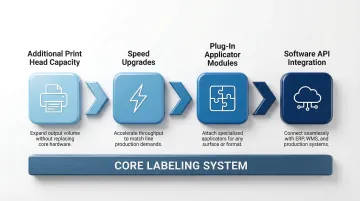
Modular or scalable systems protect your investment as production needs change. Look for systems that offer:
- Additional print head capacity for higher volume
- Speed upgrades without full system replacement
- Plug-in applicator modules for new product formats
- Software APIs that connect to future WMS or ERP platforms
Conclusion
The best industrial labeling system is not a one-size-fits-all solution. The right choice aligns with production speed requirements, product type and surface characteristics, environmental demands, compliance obligations, and long-term scalability goals. A system that works perfectly for a small-batch specialty manufacturer will fall short on a high-speed pharmaceutical packaging line, and the reverse is equally true.
Evaluate total cost of ownership, not just sticker price. Factor in downtime risk, maintenance needs, label material costs, labor savings, and compliance penalties avoided. A higher-quality system with lower operating costs often delivers better ROI than a cheaper unit that requires constant intervention.
Once your labeling system is in place, the labels themselves matter just as much. RE&D has manufactured and distributed safety identification products for 33 years, supplying custom safety labels, pipe markers, GHS labels, and compliance signage to industrial and manufacturing facilities across the country. Contact RE&D directly to discuss your facility's requirements:
- Phone: 1-800-552-3127
- Email: sales@redsafetyids.com
- Website: redsafetyids.com
Frequently Asked Questions
What is the best machine to make labels?
The best label-making machine depends on your use case. Thermal transfer printers are the industry standard for durable industrial labels that must withstand harsh environments, while print-and-apply systems are preferred for automated production lines requiring high-speed throughput. Standalone industrial label printers from brands like Zebra and SATO are widely trusted for on-demand compliance and asset tracking applications.
What are the 4 types of labeling?
The four main types are:
- Pressure-sensitive: Self-adhesive labels on release liner (~40% market share); most common in industrial settings
- Glue-applied: Wet, cold, or hot glue applied at the point of application (~35% share)
- Heat-applied: Shrink sleeve or stretch labels formed via heat tunnels (~19% share)
- In-mold: Labels fused directly into plastic containers during manufacturing
Pressure-sensitive dominates industrial use for its versatility and ease of application.
What industry uses the most labels?
The food and beverage sector is the largest consumer of labels globally, accounting for approximately 35-45% of total label market volume, followed closely by pharmaceutical/healthcare and transport/logistics sectors. The packaging labels market reached $53.92 billion in 2024, with food & beverage driving demand for variable information printing, traceability, and regulatory compliance labeling.
What is the difference between industrial labels and regular labels?
Industrial labels are engineered to survive chemicals, temperature extremes (-40°F to 300°F), moisture, and abrasion — and must meet standards like OSHA, GHS, and ANSI Z535. Regular paper labels use direct thermal printing that degrades quickly under environmental stress, making them a poor fit for asset tracking, safety compliance, or outdoor use.
How do I choose the right labeling system for my facility?
Start by evaluating your production volume, surface types, environmental conditions, and compliance requirements (OSHA, GHS, etc.). Also confirm whether the system needs to integrate with your WMS or ERP. For safety identification or compliance-specific applications, working with an experienced labeling specialist — like the team at RE&D — helps match the right system to your actual operational demands.
What label materials work best in harsh industrial environments?
Polyester, vinyl, and BOPP (biaxially oriented polypropylene) are the top choices for harsh environments:
- Polyester: Withstands -40°F to 300°F and harsh solvents; best for extreme conditions
- Vinyl: 8-10 year outdoor durability with flexibility for curved surfaces
- BOPP: Cost-effective moisture resistance suited for indoor industrial use
Pair any of these substrates with thermal transfer printing and resin ribbons for maximum long-term durability.